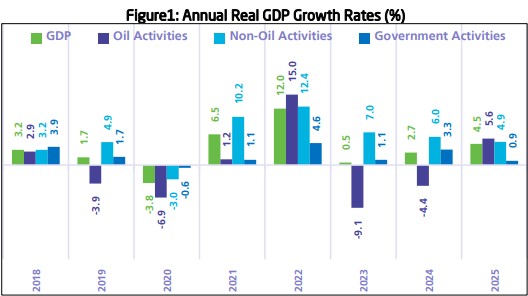
Saudi Arabia’s economy recorded its fastest expansion in three years in 2025, fuelled by a rebound in oil output following changes in OPEC+ production policy.
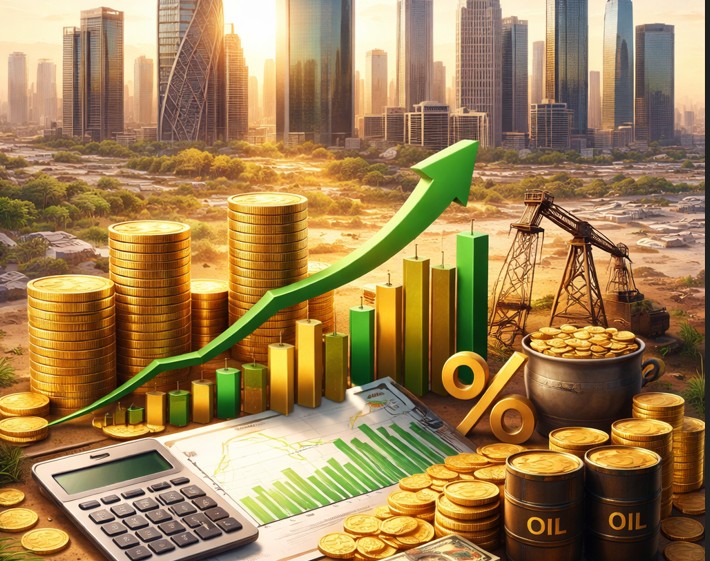
Gross domestic product rose 4.5% over the year, according to flash estimates from the kingdom’s statistics office. Oil activities grew 5.6%, followed by non-oil sectors at 4.9%.
Oil giant Saudi Aramco boosted production from mid-2025 in line with higher output targets set by the OPEC+ alliance. Brent prices ended last week around the $70-a-barrel mark, hovering near six-month highs on concern the US could launch a military strike on Iran.
Saudi Arabia, the Middle East’s largest economy, is pouring billions into Crown Prince Mohammed bin Salman’s Vision 2030 agenda, aiming to diversify the economy by expanding non-oil sectors such as tourism, technology, and entertainment. The government plans to raise about $58 billion this year to fund a projected budget deficit and refinance maturing debt.
In the final quarter of 2025, real GDP grew 4.9%, with oil output surging 10.4% and non-oil sectors advancing 4.1%, highlighting the dual impact of robust energy production and steady non-oil growth. Reflecting these dynamics, the International Monetary Fund last month revised its growth forecast for Saudi Arabia upward to 4.5% for 2026.
📌 Why it matters: Saudi Arabia’s accelerated growth underscores the kingdom’s continued reliance on oil while highlighting the early impact of Vision 2030 reforms. Strong economic performance could attract more foreign investment and solidify Riyadh’s role as a global financial hub.
📌 Bottom line: With oil output climbing and non-oil sectors gradually expanding, Saudi Arabia enters 2026 with a solid economic footing, balancing energy-driven gains with long-term diversification goals.