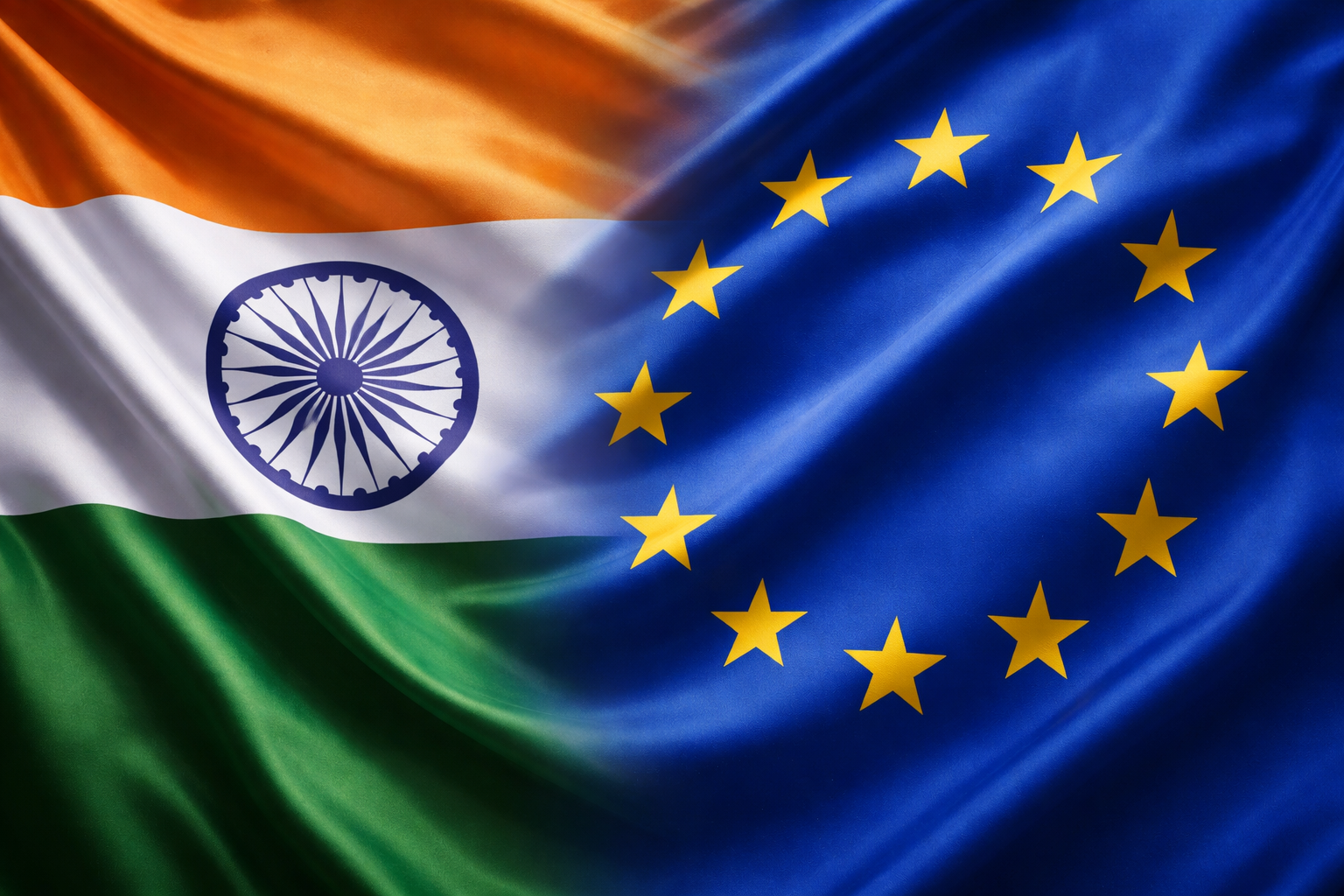
India and the European Union have officially signed a major trade agreement, ending nearly 20 years of negotiations and signaling a strategic push to strengthen economic ties amid uncertain relations with the United States.
Under the deal, tariffs on 96.6% of EU exports to India will be reduced or removed, potentially doubling European shipments by 2032 and saving EU companies an estimated €4 billion ($4.75 billion) in duties. Key sectors benefiting include automobiles, industrial machinery, wine, chocolates, and pasta.
On the other side, India will gradually cut tariffs on 99.5% of imports from the EU over seven years. The agreement notably reduces levies on marine products, leather and textiles, chemicals, rubber, metals, and gems and jewellery. India will also lower car tariffs from 110% to 10% over five years, while alcohol duties such as wine will fall from 150% to 20% over time, with spirits dropping to 40%.
“We have concluded the mother of all deals,” European Commission President Ursula von der Leyen posted on X on Tuesday. “We have created a free trade zone of two billion people, with both sides set to benefit. This is only the beginning.”
📌 Why it matters: This pact opens one of the world’s largest markets to EU businesses while giving India access to a wider range of European products, strengthening trade resilience in the face of global tariff uncertainty.
📌 Bottom line: The agreement marks a strategic economic alignment that could transform India-EU trade flows, cut costs for exporters and importers, and diversify both economies’ global trade exposure.